Key Takeaways
- What is an IRA charitable distribution? It’s a direct transfer from your IRA to a qualified nonprofit, made without the funds ever passing through your hands
- Who can use one? Anyone age 70½ or older with a traditional or inherited IRA
- Is it taxable? The transferred amount is excluded from your gross income entirely.
- What is the annual limit? Up to $111,000 per person in 2026
- Does it satisfy my required minimum distribution (RMD)? Yes, a QCD counts dollar for dollar toward your RMD
- Can a QCD exceed your RMD? Yes. The RMD is satisfied first, and any additional amount still counts as a QCD (up to the annual IRS limit). However, any excess does not carry forward to future years’ RMDs
Giving generously in retirement doesn’t have to mean a bigger tax bill. This article covers how IRA charitable distributions work, who qualifies, annual limits, and the rules you need to follow.
What Is an IRA Charitable Distribution?
A qualified charitable distribution (QCD) is a direct transfer from an eligible IRA to a qualified 501(c)(3) nonprofit. This can include your own traditional IRA or an inherited IRA, as long as you meet the age requirement. The money never lands in your bank account. It goes straight from the IRA custodian to the charity of your choice.
Because you never technically receive the funds, the IRS doesn’t count them as income. This allows the donation to potentially satisfy all or part of your RMD without increasing your taxable income.
Giving through a QCD is a simple way to strengthen your local and broader community. These donations support a variety of nonprofits, including those working to assist veterans with housing stability, mental health care, and reintegration into civilian life. For many people, it’s a way to turn retirement savings into meaningful, direct impact where it’s needed most.
How Qualified Charitable Distributions Reduce Your Taxes
Most IRA withdrawals are added to your gross income and taxed accordingly. A QCD skips that step.
Knowing how to make a qualified charitable distribution correctly keeps the donated amount out of your adjusted gross income. A lower AGI can reduce your Medicare premiums, limit how much of your Social Security benefit is taxed, and keep you in a lower bracket overall.
This is especially helpful for retirees who take the standard deduction and would not otherwise receive a tax benefit from their charitable gifts. For a broader look at maximizing charitable tax deductions in 2026, it’s worth reviewing current strategies before year-end.
How Much Can You Donate Through a QCD Each Year?
The IRS sets an annual ceiling on QCD contributions. In 2026, the qualified charitable distribution limit is $111,000 per person. Married couples filing jointly with separate IRAs can each contribute up to the annual cap, effectively doubling the household giving potential for a combined maximum of $222,000.
Any amount above the limit is treated as a regular taxable distribution, so planning ahead matters. Avoiding this and other common missteps is a central part of sound financial planning.
IRS Rules and Common Mistakes to Avoid With QCDs
A qualified charitable distribution from an IRA must meet strict IRS guidelines. Here are the rules to keep in mind:
- Payable to charity only: The check must be made payable directly to the qualified charity, not to you personally.
- No goods or services allowed: You cannot receive any goods, services, or benefits in return for the gift if you want it to qualify as a QCD.
- IRS reporting via 1099-R: Your IRA custodian will issue a Form 1099-R showing the full distribution amount for tax reporting purposes.
- Tax return reporting required: You must properly report the QCD on your tax return to ensure it’s excluded from taxable income.
- Rollovers are not QCDs: Traditional IRA rollovers or transfers between retirement accounts do not qualify as qualified charitable distributions.
- Age requirement: You must be age 70½ or older at the time the distribution is made to qualify for a QCD.
- Eligible account types only: QCDs can only be made from IRAs; employer-sponsored plans like 401(k)s and 403(b)s are not eligible.
- Restricted recipient rules: Distributions cannot go to donor-advised funds or private foundations and must go directly to a qualifying 501(c)(3) public charity.
- Multiple gifts allowed: You can make multiple QCDs throughout the year as long as the total amount does not exceed the annual IRS limit.
Getting these details right ensures your charitable contributions from your IRA remain fully excluded from taxable income. Many qualifying organizations, including those that support veterans, make excellent recipients for a QCD.
Why IRA Charitable Distributions Are a Smart Retirement Giving Strategy
A QCD lets you give more generously without raising your tax bill. It satisfies your required minimum distribution, lowers your AGI, and directs your retirement savings toward causes that matter. Whether you’re new to charitable planning or ready to give more strategically, it offers a straightforward way to align your retirement income with meaningful philanthropic impact.
If you’re exploring ways to make your giving more intentional, consider looking into opportunities to support nonprofits that serve veterans through an IRA charitable donation.
Because individual tax situations vary, donors should consult their tax advisor, accountant, or financial planner regarding the tax implications of a qualified charitable distribution.
About National Veterans Homeless Support (NVHS)
NVHS seeks to eliminate homelessness among veterans in central Florida. NVHS takes a proactive, intervention-based approach to housing instability by meeting homeless veterans where they are and helping them from there.
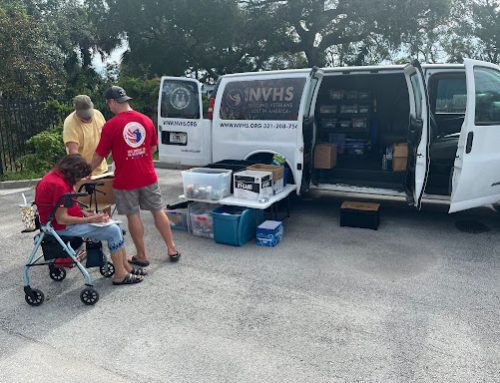
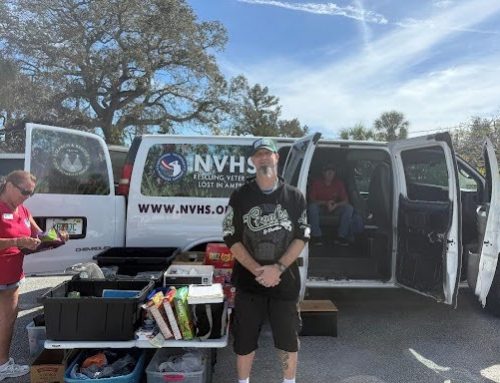
Through programs such as Search and Rescue Outreach, NVHS helps homeless veterans get the supplies they need to survive, connects them with support and resources, and assists them in transitioning off the streets and into temporary or permanent housing. Some of our programs also include art therapy to help veterans heal. If you’re able, consider supporting our mission by donating or signing up as a volunteer.