
Veterans and Mental Health

Mental health can affect many parts of a veteran’s life, including relationships, work, substance use, physical health, and housing stability. A veteran may be trying to manage anxiety or depression while also dealing with financial pressure. Another may recognize symptoms of PTSD but not know whether to contact the VA, a community provider, or a crisis service. Loved ones may notice changes but feel unsure about how to help without overstepping.
These concerns don’t always appear one at a time, and no single experience defines veterans. What matters is recognizing when additional support could help and knowing where to turn next. We created this resource to make that process easier by connecting veterans and their loved ones with appropriate mental health, crisis, PTSD, substance-use, housing, and VA resources.
If you are unsure where to begin, use our NVHS Chatbot to explore available resources and find a starting point that fits your situation.
Understanding Mental Health Without Stereotyping Veterans
Military service does not automatically lead to mental health challenges, and veterans experience mental health in many different ways. Some people may experience symptoms shortly after service, while others may seek support years later. Others may never develop a mental health condition at all.
Common Concerns That May Need Additional Support
Veterans may seek help for conditions or experiences including:
- Post-traumatic stress disorder (PTSD)
- Depression or persistent sadness
- Anxiety or difficulty managing stress.
- Grief and loss
- Military sexual trauma (MST)
- Substance-use concerns
- Difficulty adjusting to civilian life
- Sleep problems or changes in daily functioning
- Thoughts of suicide or other mental health crises
Recognizing a possible concern does not mean diagnosing yourself or someone else. Persistent changes that interfere with daily life, relationships, work, safety, or housing can be a reason to talk with a qualified professional.
How Mental Health and Housing Stability Can Intersect
Mental health and housing are different needs, but they can affect one another. A veteran experiencing housing instability may face additional stress, disrupted routines, isolation, transportation problems, or difficulty maintaining appointments. These circumstances can make an existing challenge harder to manage.
Likewise, untreated mental health or substance-use concerns may make it more difficult for some people to maintain employment, relationships, finances, or stable housing. This does not mean mental illness causes homelessness or that every veteran experiencing homelessness has a mental health condition. It means that looking at the whole situation can help identify more appropriate support.
When Housing Help Is Part of the Solution
Our work focuses on helping homeless and at-risk veterans address housing instability and connect with resources that support greater stability. Our programs include street outreach, prevention case management, transitional housing, housing assistance and resource connections, emergency supplies, and connections to benefits and other support services.
We do not provide clinical mental health treatment. Instead, we can help veterans and families identify housing-related needs and navigate appropriate VA or community resources when mental health concerns overlap with housing instability.

Choosing the Right Mental Health Resource
Knowing which organization to contact can be difficult when several concerns overlap. The right starting point depends on what is happening now and whether the situation requires immediate intervention.
VA Mental Health Services
The U.S. Department of Veterans Affairs provides mental health services addressing PTSD, depression, anxiety, grief, military sexual trauma, substance-use concerns, and other behavioral health needs. Some services may be available even if a veteran is not enrolled in VA health care.
VA services can include counseling, psychiatric care, treatment for PTSD and substance-use concerns, and other mental health support. Vet Centers also provide readjustment counseling and related services for eligible veterans and family members.
Our VA mental health resources for veterans can help veterans and loved ones understand available options and determine where to begin.
PTSD Resources
PTSD can affect veterans differently. Some people experience intrusive memories, nightmares, avoidance, heightened alertness, sleep difficulties, or mood changes. Symptoms can occur soon after a traumatic experience or emerge much later.
The VA’s National Center for PTSD provides information about PTSD symptoms and evidence-based treatment options. Veterans can seek PTSD treatment even if they have been home from service for many years.
Substance Use and Mental Health Support
Alcohol or drug use can sometimes become part of how a person attempts to manage stress, trauma, pain, or other difficult experiences. Substance-use concerns can also exist alongside mental health conditions, creating a need for coordinated care.
When Recovery Support May Be Appropriate
Veterans do not need to wait until substance use causes a major crisis before seeking assistance. The VA provides assessment and treatment for substance-use problems, including support for veterans experiencing both substance-use and mental health concerns.
Loved ones can encourage a veteran to speak with a qualified provider without trying to diagnose the problem or manage treatment themselves. If housing instability is also present, connecting with NVHS can offer another pathway to address immediate housing-related needs.
If you or a veteran you care about needs help sorting through housing, mental health, substance-use, or other concerns, use NVHS Chatbot to connect with appropriate resources.
Suicide Prevention and Mental Health Crisis Support
Mental health information should never replace crisis intervention. If a veteran is experiencing suicidal thoughts, severe emotional distress, or an immediate safety concern, use a qualified crisis service rather than waiting for a routine referral.
Veterans Crisis Line
The Veterans Crisis Line is available 24/7 for veterans, service members, and people concerned about them. Call 988 and press 1, text 838255, or use the Veterans Crisis Line chat online. VA states that the service is free, confidential, and available regardless of whether a veteran is enrolled in VA health care.
If there is an immediate emergency or someone is in imminent danger, call 911, go to the nearest emergency department, or go directly to a VA medical center when it is safe to do so.
Our website and chatbot are not emergency or crisis services. We want veterans and families to understand that distinction so they can reach the appropriate support without delay.
How NVHS Fits Into the Mental Health Resource Network
Our role is to help veterans and families navigate resources, particularly when mental health concerns intersect with homelessness or housing instability. We can help identify housing-focused assistance, connect veterans with appropriate community resources, and provide support through our housing and outreach programs.
We Connect, Rather Than Provide Clinical Treatment
We do not diagnose mental health conditions, provide therapy, prescribe medication, or replace a psychiatrist, therapist, crisis responder, or other qualified behavioral health professional. As a connector, we help veterans access those services while addressing the housing-related challenges within our mission.
Our broader Veteran Resources guide brings together information covering health care, mental health, housing, benefits, financial assistance, and other areas that can affect veteran stability.
This coordinated approach can be especially useful when a veteran does not know which problem to address first. Sometimes the best starting point is mental health care. Sometimes it is housing assistance. Sometimes it is immediate crisis support. Understanding the distinction helps prevent delays and inappropriate referrals.
Frequently Asked Questions About Veterans and Mental Health
Does every veteran who struggles need mental health treatment?
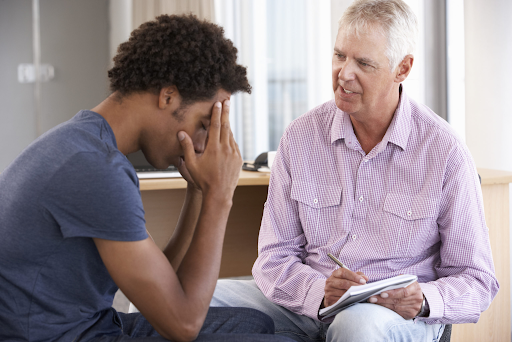
Not necessarily. Veterans have different experiences, circumstances, and support needs. If symptoms persist, worsen, interfere with daily life, or raise safety concerns, speaking with a qualified professional can help determine what support is appropriate.
Can family members get help if they are worried about a veteran?
Yes. Family members can seek guidance from appropriate VA and community resources, and people concerned about a veteran can also contact the Veterans Crisis Line for crisis support.
What if mental health concerns and homelessness are happening together?
Addressing both concerns can be important. NVHS can help eligible veterans with housing-focused services and resource connections, while qualified health and behavioral health providers address clinical mental health or substance-use needs.
Can the NVHS Chatbot handle a mental health emergency?
No. The NVHS Chatbot is a resource-navigation tool. It can help users identify information and potential resources, but it does not provide emergency intervention, crisis counseling, or clinical treatment.
Start With the Resource That Matches the Need
Mental health support doesn’t have to start with the perfect diagnosis or the perfect organization. It can begin with recognizing that something has changed and looking for an appropriate next step.
Veterans and their loved ones can use VA mental health services for clinical care, Vet Centers for eligible counseling and readjustment support, specialized resources for PTSD and substance use, and the Veterans Crisis Line when immediate crisis support is needed. When housing instability is part of the situation, NVHS can help eligible veterans navigate housing-focused assistance and connect with additional community resources.
We want this page to serve as a practical starting point for veterans and families who may not know where to turn. If you are ready to take the next step, use our NVHS Chatbot to connect with resources that fit your situation. For an immediate crisis, call 988 and press 1 to reach the Veterans Crisis Line, text 838255, or call 911 for emergency assistance.


Frequently Asked Questions
What mental health conditions qualify for VA disability?
You may be able to qualify for VA disability benefits if you have one or more of the following conditions:
- Anxiety
- Depression
- Mental health conditions that can be attributed to military sexual trauma (MST)
- PTSD
- Traumatic Brain Injury (TBI)
If you believe you may qualify, you can find information on how to apply for disability benefits through the VA here.
How to help veterans with mental illness?
If there is a veteran in your life struggling with mental illness, there are a few ways you can support them:
- Encourage them to seek professional help. The VA offers affordable mental health in-person and telehealth services for veterans.
- Offer them a safe space to express their feelings. Having someone willing to listen without judgment can be invaluable for someone struggling with mental illness.
- Research the condition, its impacts, and what support is needed. Some behaviors caused by mental illness may seem confusing or unpleasant, which can make it difficult to empathize. Understanding what your loved one is going through and how it may impact their behavior makes it easier to support their needs and to offer that support with understanding instead of judgment.
- Help connect them with other veterans with similar experiences. Having a mutual support network encourages veterans to express their feelings openly, and support each other’s healing. It also helps pull veterans out of isolation, and encourages them to socialize, which is important for mental health. The VA and Wounded Warrior Project both offer support groups. Local veteran associations may also offer support groups or social opportunities for veterans.
Where can a veteran find immediate mental health support services?
Veterans having a mental health crisis can reach out to the Veterans Crisis Line. Dial 988 and press 1, or text 838255.
Veterans can also call the VA at 877-222-8387 (Monday-Friday, 8 AM- 8 PM), or go to their nearest VA medical facility (24/7) to receive mental health services from the VA. Veterans do not need to be enrolled in VA health care to receive mental health care.
Where can veterans find affordable teletherapy options for depression?
The VA offers teletherapy for veterans enrolled in VA healthcare.
The Realities of Veteran Homelessness in Brevard County
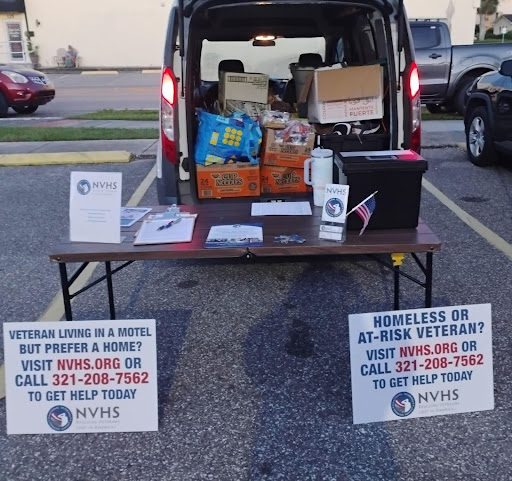
Veterans in Brevard County face challenges many of us cannot imagine. After serving our country, some find themselves without stable housing, meals, or access to healthcare. Homelessness is not a statistic; it is a daily reality that affects physical health, emotional well-being, and the ability to reconnect with family and [...]
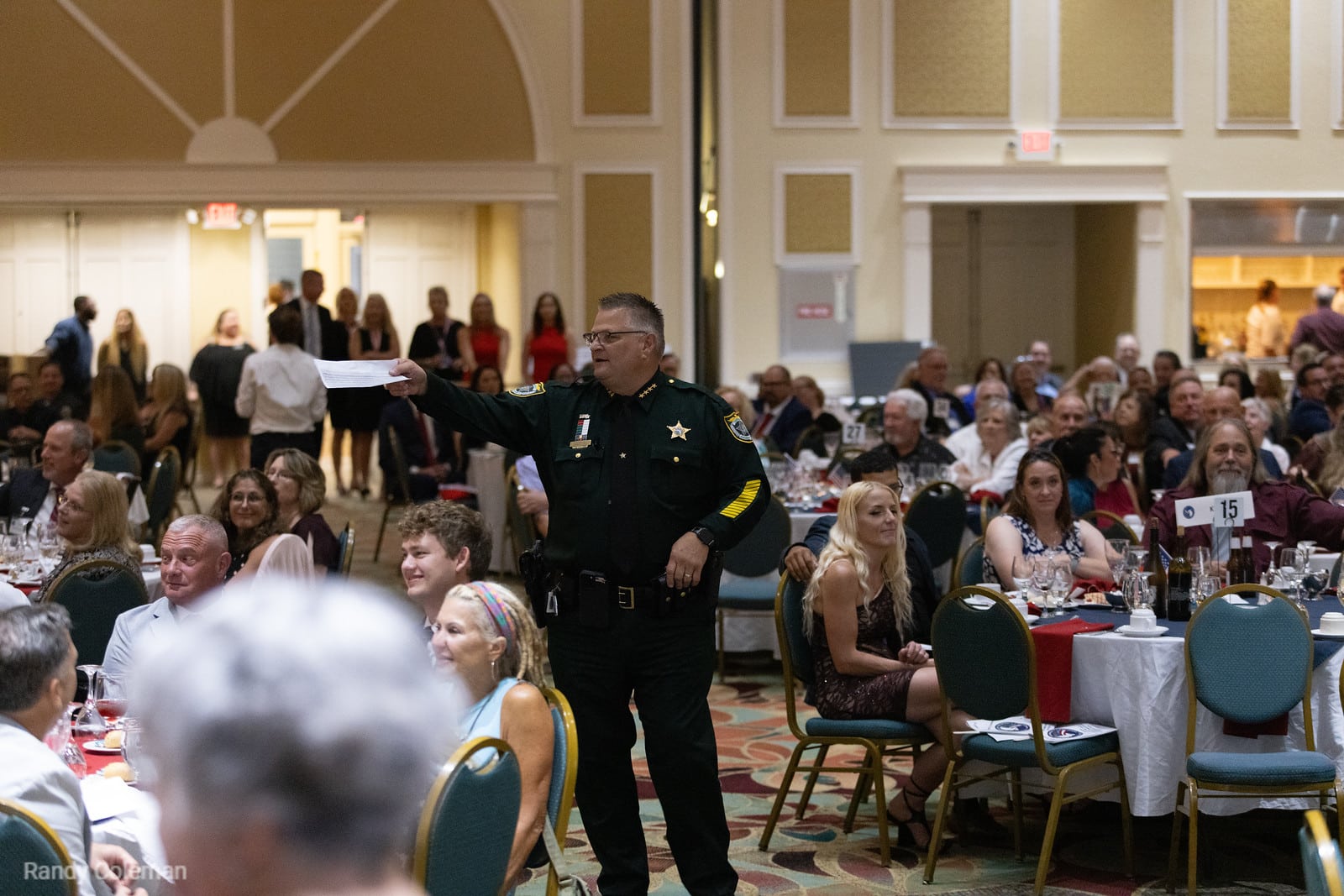
A Sheriff’s Perspective: What It Means to Serve Veterans Truly
A Sheriff's Perspective: What It Means to Serve Veterans Truly When we talk about serving veterans in Central Florida and beyond, we often think of ceremonies, salutes, or plaques on the wall. But for many of our nation's heroes, especially those facing homelessness, mental health challenges, or isolation, true service [...]
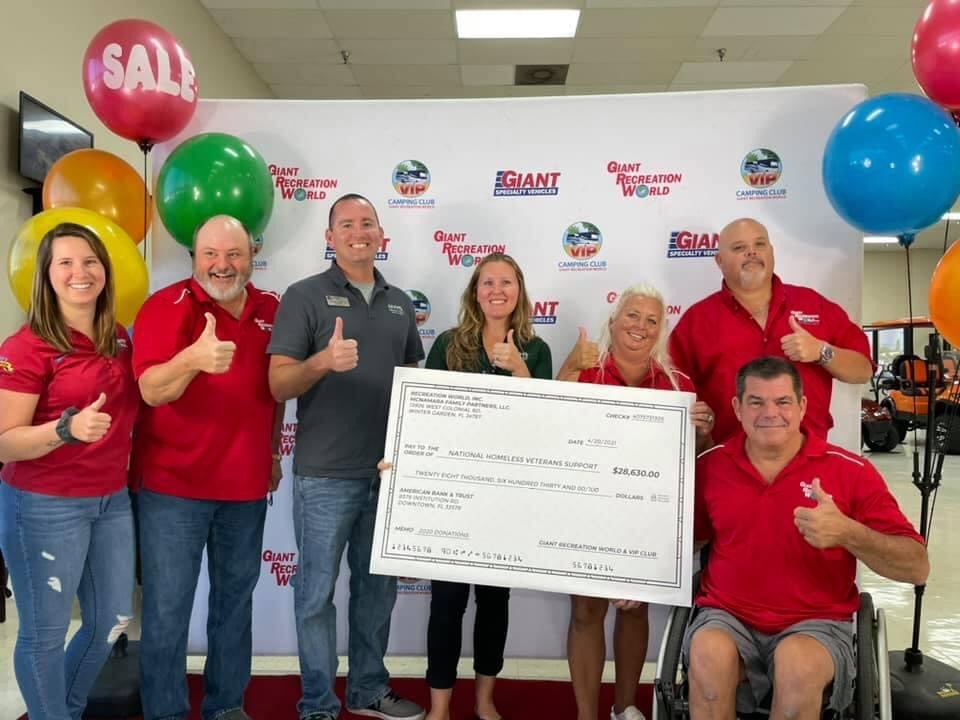
Giant Recreation World Supports NVHS
A big hug 🥰 and thanks to Giant Recreation World for their ongoing support and $28,630 donation! Special thanks to GRW's VIP Camping Club whose help has enabled ongoing support to NVHS year after year, with a total of $136,000 contributed since 2015!!! @https://m.facebook.com/GiantRecreationWorld/